Preparing the UK for systemic change
The problem is not you.
You work.
You pay.
You adapt.
You are still told to try harder.
Four decisions shape an ordinary life: what gets measured, what money costs, what the system delivers, and who is held to account. None of them are natural. All of them were chosen.
Independent · Not a political party
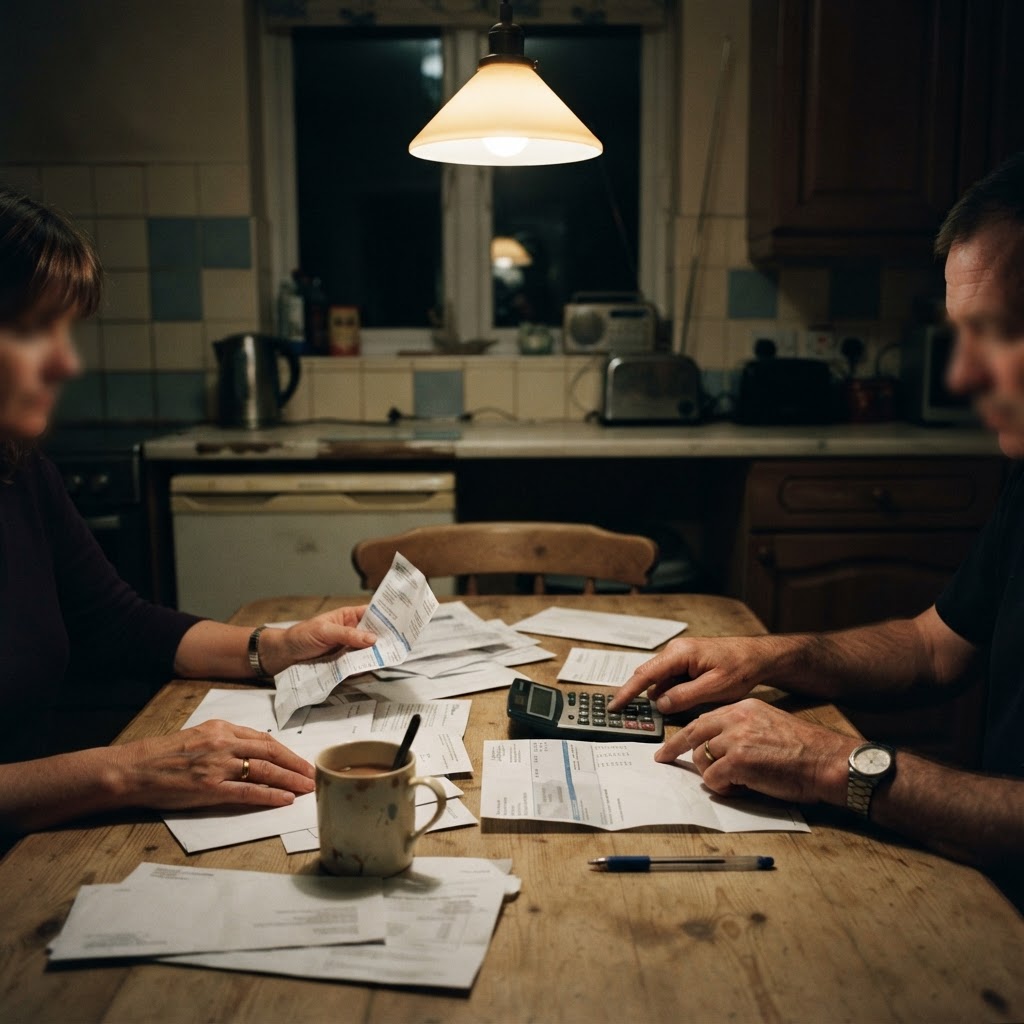
The ordinary week
An ordinary month is a set of trade-offs.
A shorter week.
A longer commute.
A smaller place to live.
Nothing here is unusual. That is the point.
The decisions
Four decisions hold it in place.
Every one of them was a choice. Every one of them can be argued with, tested and replaced.
None of it is natural. All of it was chosen.
The agenda
This is what we are preparing for.
Not a protest. A programme. Six ends, each with a route, a cost and a consequence we are prepared to publish.
Every one of them will be argued in public first.

The purpose
A different country is possible.
Everyone should live a good life. That is the standard every institution should be judged against — and the standard none of them are currently meeting.
We prepare the public for systemic change. We are not a political party.

The future
The future is a decision.
Measured.
Funded.
Tested.
Defended in public.
Not announced. Not predicted. Proposed, published, argued over, tested — and then decided by the people who have to live with it.
Start with the number.
Seven arguments, one standard: everyone should live a good life. Begin where the pressure begins — with what the country measures, and what that measurement lets it ignore.
Preparing the UK for systemic change
SocialJustice.org.uk